Alone
He was the only one who knew where he was going.

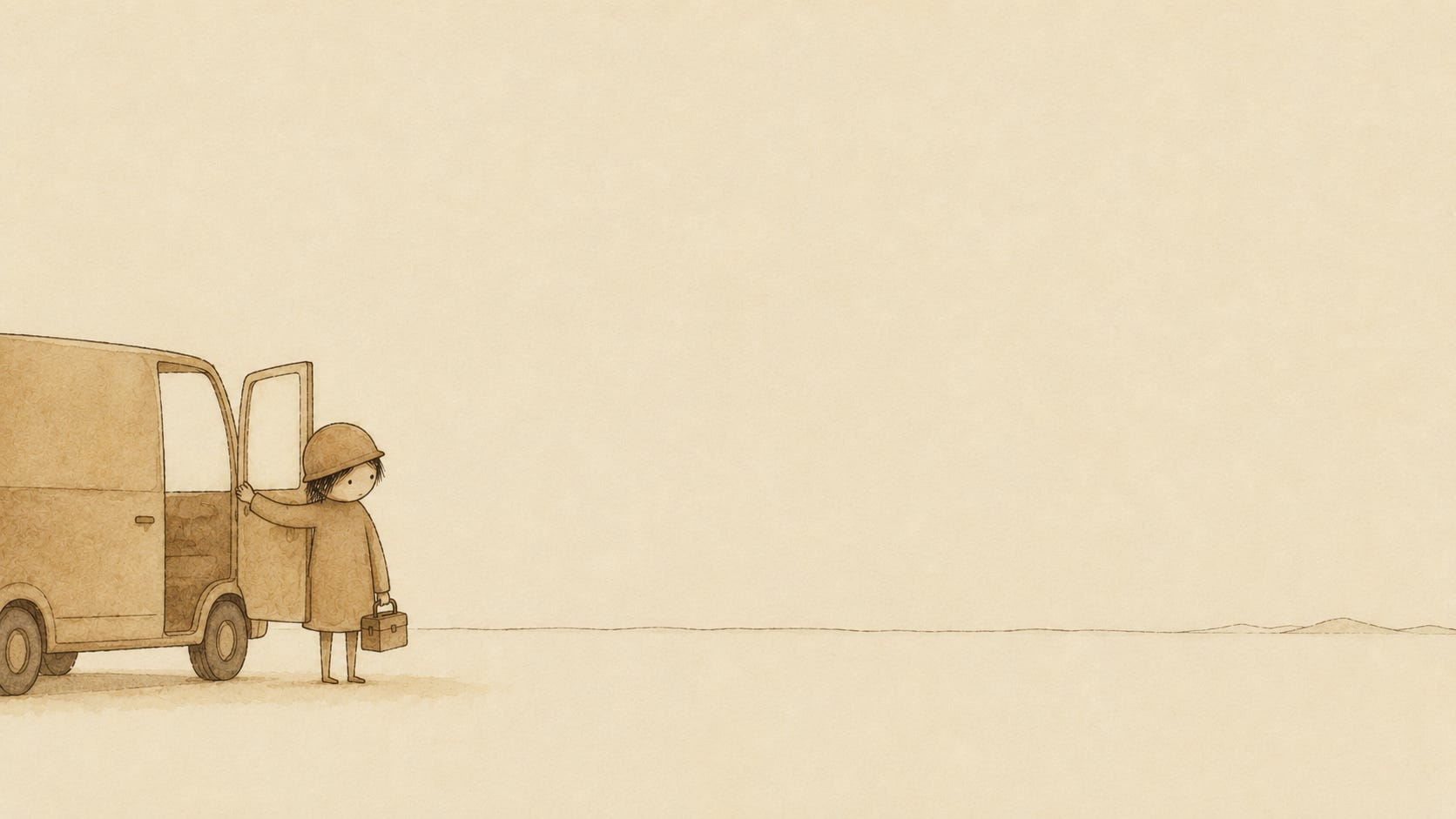
He packed the van himself, the way he always did. Tools loaded in the order he would need them. An address written on a piece of paper on the passenger seat. He had been doing this for eleven years: arriving at a job before anyone else was there, working through the day, leaving when the work was done. No crew to check in with. No supervisor to sign off on.
That was the arrangement. That was, in many ways, the point.
Self-employed construction workers in the United Kingdom are more than twice as likely to die on the job as those employed by a company, according to data published by the country’s workplace safety regulator in 2025. In the most recent reporting period, forty-five percent of all construction fatalities were self-employed workers.
Not forty-five percent of the construction workforce. Forty-five percent of the dead.
The gap is not skill. It is structure. A worker employed by a company moves inside a system, however imperfect, that has some capacity to notice. A supervisor. A crew. A check-in at end of shift. When something goes wrong, there are people in the system who register the absence.
A self-employed contractor working alone does not have that system. When something goes wrong, there is no one on site. The alarm is not raised because there is no one to raise it.
Structural isolation is not loneliness. It is the specific gap that opens when a person works outside the organisations that safety was built around. Inductions, permits, handover logs, hazard reports: these were designed for teams in workplaces. They were not designed for one person and a van and an address written on a piece of paper.
The Health and Safety Authority in Ireland named it plainly in a report published in early 2026, following a sixty-one percent rise in work-related fatalities in a single year: when self-employed workers operate alone, and incidents occur, there may be no one present to help or raise the alarm.
The report offered guidance. It urged vigilance. It said that working safely alone was entirely possible.
It did not change the architecture.
He finished the job. Or he didn’t. One of those things happened and the record looks the same either way. No shift log. No check-in. No field that captures what time the person left, or whether they left at all.
Someone is expecting him.
The van is still there.
These reflections are based on my own observations and learnings across industries. They do not reference any specific company, organisation, or individual.